


One-man crew or team
If it's a one-man crew, then there's nothing you can do. You'll have to do everything yourself. But if you can afford a team, then it's better to put the responsibility for planning and executing the plan on different shoulders from the very beginning. While you yourself are in the middle. I advise you to allocate the so-called "floating crew" at the very beginning of the business and clearly separate it from the "shore crew". Allocate it as a separate privileged caste.
I advise you to highlight the "sailing crew" and separate it from the "shore crew".
The first are those who earn money for the company and risk their income with it, and the second are those who spend it and do not risk their earnings. In aviation, by the way, those who fly and those who service planes eat in different canteens and have slightly different uniforms. Think for yourself why everything was arranged like this even in a socialist society. And I will give you a small example from real business. A friend of mine worked as a producer on a very popular FM radio station. Well, he told me that the presenters sometimes do not have time to go to the toilet, because they are constantly on the air. While sysadmins, accountants, etc. constantly drink free coffee and cookies in the company cafeteria. Make sure that those who earn money for you have benefits, honor, and privileges, and those who help them have a little less.
The planning team is not just your subordinates. There are many businesses that cannot be 100% planned within the company. Even my nautical metaphor does not imply that the captain will build his own ship. You can involve independent contractors in business planning. Engineers, architects, technologists, designers, etc. But do not forget what you are about to hear. No one will plan your business for you.
The headquarters of your business should be in your office.
The headquarters of your business should always be in your office. Do not let interested marketing contractors plan your activities in the market. Let them plan their work.
What a new office or shopping center should be, is not determined by architects, because they issue invoices depending on the area of the project. This is determined by the one who bears the risks. The developer, together with real estate consultants, develops a commercial concept for a commercial real estate project, based on its capabilities and market demand for rental space from tenants, and not on the desire of architects to create a monument for themselves during their lifetime for the customer's money. Their area of responsibility is a competitive, effective and attractive architectural concept and its implementation in project documentation. Architects introduce technologies that they own into the project, but not business strategies.
Similarly, digital marketing specialists are only technologists and creatives, but not strategists. They are forced to take on this function because they cannot receive a clearly formulated task from the customer. They do not even make money on strategies, developing them for their own marketing purposes and presenting them to the customer as a way to promote their own services. These presentations are as bright and bold as free draft proposals from architects at a tender, but, unfortunately, they are just as useless. Everyone is well aware of the role of free cheese and its quality. It is surprising what customers hope for when they expect one of the contractors to understand their business better than them. Contractors usually understand their own business quite well. They will be happy to receive a detailed and thoughtful task from the customer and free themselves from performing functions that are not typical for them. It is difficult to imagine an architect analyzing the level of vacancies in the commercial real estate market and the dynamics of changes in rental rates. But for some reason, the customer can easily imagine an SMM specialist studying his target audience and competitors? Why should someone do your work for you and not get paid for it? Well, except to create visibility. To imitate.
The reasons for imitation are as follows.
At the dawn of Ukrainian real estate development, in the zero years, I was lucky enough to take part in several projects with the participation of foreign companies. These projects used Western business practices. Surprised local contractors rushed to borrow Western attributes to more effectively promote their services in the local market. Customers before my eyes entered a hypnotic trance, hearing a multitude of unfamiliar and Western business terms that certainly aroused trepidation. Architects and designers with whom I collaborated in the same projects where foreign architects performed part of the work now offered the customer not Soviet general plans and feasibility studies, but master plans and feasibility studies. In essence, these names mean the same thing. But the commercial real estate projects of Western and Soviet architects, as before, were very different. Knowledge of terminology did not lead to an understanding of advanced work methods or advanced training. Instead, it turned into a weapon in the competitive struggle.
Today, a digital marketing agency that has worked with an international brand is able not only to charm a national customer with Western approaches, but also to see the gap between them absolutely clearly and understand that if it does not perform some of its functions for the customer, the project will not even start. But the agency has not added any competencies for strategic planning. The agency did an excellent job with its work, for example, for McDonald's, but it has no idea how strategies are developed there and where they are developed at all. Education in the West or a consultant is not cheap, and why does the agency need all this? A simpler solution is needed, and it has been found. Behind the correct terms is imitation. Agencies do not charge a fee for such imitation - their conscience seems to be clear. The customer, if he suddenly comes to his senses and comes out of hypnosis, can fix something and insure himself. In short, it will always be better for everyone than nothing. After all, contractors write their own technical specifications on behalf of the customer - a practice, although wrong, but very common. It is difficult to even imagine the world around us if everything in it was created strictly according to the customer's instructions. But this is not about how to solve this global problem, but about how to make the interaction of a specific company with its marketing contractors effective.
Competitive advantage.
The ability to integrate developed market expertise into your own corporate framework provides a significant competitive advantage in the local market and lays the foundation for further possible globalization of the business. All you need to do is not let the imitators fool you, but instead attract real specialists and consultants from developed markets. And if you have the budget, then some contractors. The planning team is the initial group of employees, specialists, and contractors who participate in preparing the business for market entry. This means that it is temporary. I will tell you as an aeronautical engineer by profession. You do not need a design office to operate an aircraft. In fact, engineers for aircraft operation and for their design are distinguished. They are even trained separately. This should prove to you that you should have two teams. The best one you can find for planning. And the one you can afford to start the business. This means that when you start a new business, you don't bring in friends, neighbors, or relatives unless they are the best at what they do. Then you hire them. Competition only gets tougher over time. Start with the best, so you don't drown later. Optimize your costs later.
Find yourself an advisor and consultants.
Find yourself an advisor and consultants. If it's a one-man crew, even more so. Because "one in the field is not a warrior." Your driver, if you have one, an accountant, and a cashier do not count. Let me explain to you right away what the difference is between an advisor and a consultant and what their identity is. An advisor can tell you what needs to be done. A consultant: how can this be done best?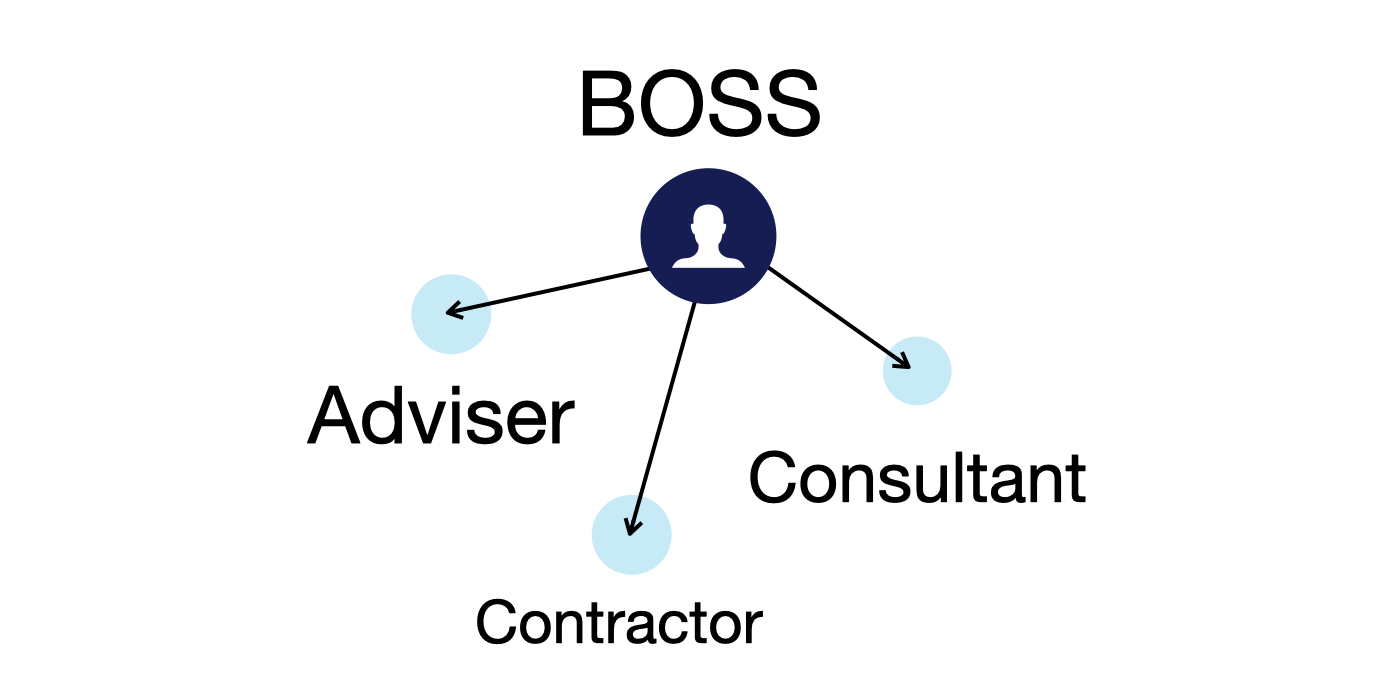 An advisor, for example, might advise an entrepreneur to create an online store. The advisor knows how to do it better. A contractor sometimes knows this too, but will do it for their own benefit, not for the entrepreneur. The identity of an advisor and a consultant is that they are independent of either you or the contractors.
Objectivity of planning.
The consultant's independence from the stakeholders of the company he is consulting, the consultant's lack of bias, political and career motives, as well as the absence of involvement in corporate conflicts of interest contribute to a more sober view of the current situation. The combination of internal and external subjective views of the situation ultimately leads to the objectification of the overall vision.
Safety measures.
Even if the planning team is 100% your own, you need to take steps to ensure that your great ideas are not shared without your permission. We'll discuss counterintelligence later in the Intelligence section, and Security in the Error Analysis section. But for now, let's assume that you don't have either, and if you do, you don't want to involve them in the early planning stages. For a release like this, I recommend doing something like the image below.
Play puzzles. Make sure none of your contractors or even employees see the whole picture. No NDA will help if key secrets fall into the wrong hands. Although I advise you to sign such contracts anyway. But I'm getting ahead of myself. I advised you how, according to officials, to act in accordance with current legislation. Vrno allows the head of the institution to use the "For Official Use" mode.