

Launch - Growth - Expansion into foreign markets are three consecutive market exits that must be distinguished in the same way that children, youth, and adults are distinguished.
Exit or, in fact, entry into the market?
It is "entry", although stereotypically we say "exit". This is just a bad habit. It should be abandoned just as we refused to say "to Ukraine". The word "exit" changes the meaning of the operation. It turns it into an exit onto the stage, where the audience is already waiting for you. No one is waiting for you in the market. They may even prevent you from getting there. The word "entry" hints at the need to make efforts to penetrate the market. But I am not only talking about penetrating the market in the book. Not only about leaving the port, but also about returning. About fulfilling the mission.
Entering the market is like joining a criminal organization. As they say in such cases - entry costs a dollar - exit costs two. The same in business. Sometimes you can't just get out of business, because you have many obligations to customers, the government, creditors, and staff. Few people pay attention to the first and last, but not to the government and creditors.
Perhaps it's not entirely correct to call businesses small, medium, and large—that's what tax officials came up with. It would be better to call them child, teenager, and adult.
Launch - Growth - Expansion into foreign markets - these are three consecutive market entries.
Three stages of business development. Launch - Growth - Expansion into foreign markets - these are three successive market entries that need to be distinguished in the same way as children, youth, and adults are distinguished.
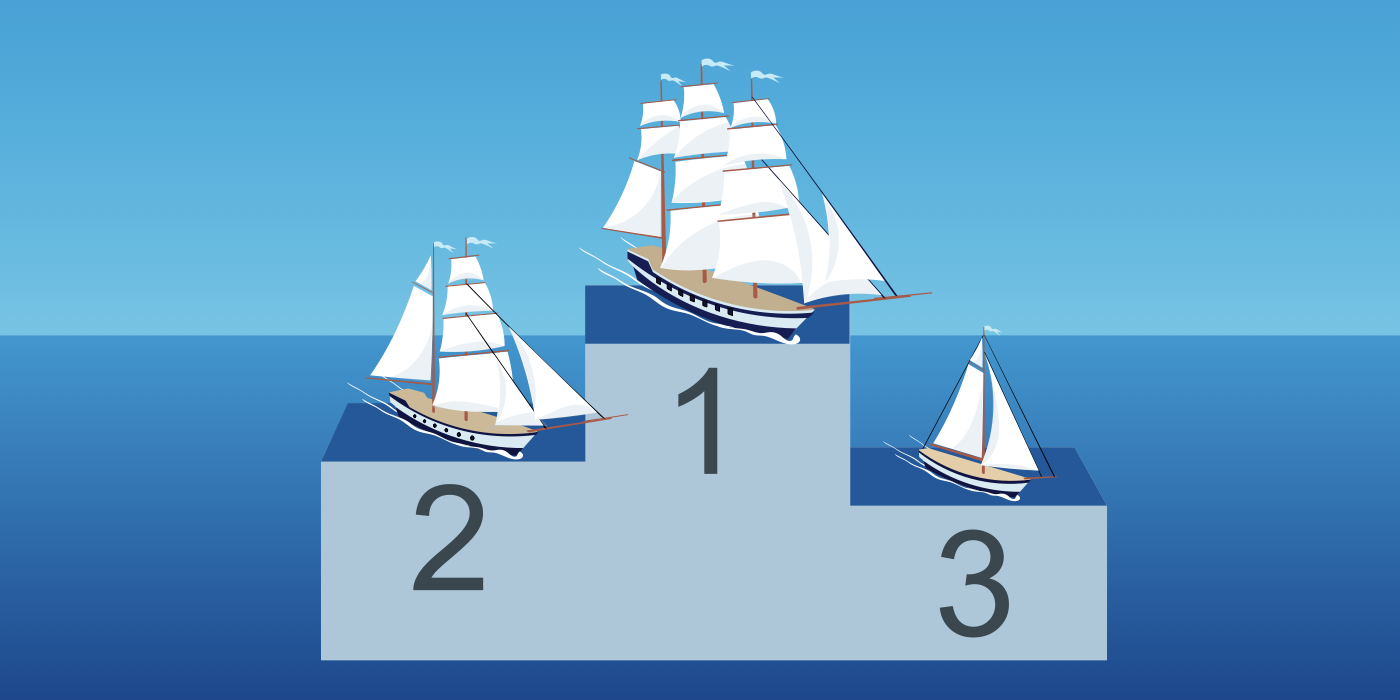
The names of all three stages make a lot clear, but not everything you need to know. There is something else important. Therefore, before moving on to the section of each stage, I will tell you a little about them and explain how they differ from each other. Let's start the review from the end. It is always interesting to know before starting the journey where you can get to. You will not need to look at the last chapters of this part, because I will do it for you now. I offered you a nautical metaphor. It associates business with a sailing ship. Accordingly, the largest ship, in our case a brig, demonstrates a large international business. This is the undisputed winner of world business competitions. The highest league of business. It is in first place. Brigantine demonstrates a national business. That is, a company that has been able to reach a national scale. It takes second place. A yacht demonstrates a local business. A company that has stayed afloat for a long time and is not going to sink. It takes an honorable third place.
First place in business competitions is international business.
A large company goes through all three stages and becomes world-famous, at least for its industry and for those who look at the Fortune 500. This is a list of the 500 largest companies in the world. Although this company also publishes regional listings. European 500, Asian 500, American 500 - etc. It can be compared to the Hollywood Walk of Fame. The only difference is that this, so to speak, Business Walk of Fame is large in size and constantly changing; that is, it is updated. Businesses probably do not really deserve immortality like movie stars. Because movie stars are for all time, and businesses, for the most part, lose relevance over time and disappear from the 500 list. At least, if it is not a carbonated drink like Coca-Cola. Who will now remember the outstanding manufacturer of steam locomotives or telegraph machines? This glorious Fortune 500 list is only about today. Most likely, this is done for the stock market, so that, perhaps, one can see promising companies for investment and even promising areas of activity. But not everyone who wants their business to reach such a level is lucky. These are mostly companies from large markets and even from closed markets, where the state helps them monopolize the local market. Most likely, these heroes in closed societies are state-owned companies that sell citizens some vital goods and services. Even in free countries, there is a post office and a railway. If the population of such a country is considerable, such infrastructure companies easily get into the same Fortune 500. Thanks to the huge operating revenue. In my opinion, this prevents them from using the rating for market needs. But still, getting into it for a market company is like climbing Everest.
Second place in the business competition is national business.
The second place of honor for a business in the middle. This is for those who achieve great success in the national market. If you work in the reproductive market. That is, in the market of followers who make national copies of world-famous goods and services, but more accessible to consumers in their country. Then this is your ceiling. An honorable second place is not so easy to get. You will have to fight with global brands from the Fortune 500, whose goods and services you copied. They are always ahead and have no problems with raising capital. But if you managed to do this, you are a real star. Do not pay attention to China. They are a special case. Chinese companies began to copy popular goods not for their market. They beat big brands with prices in their own territory. I do not advise you to follow this path, because the Chinese attacked only big brands, and you will have to attack both big brands and Chinese goods at the same time. This can quickly sink you. But if you're not in a small reproductive market, but in a large productive market, if you have an original winning product, your path to the Fortune 500 is open. They're there waiting for you, and it's entirely up to you to take advantage of it.
Third place in the business competition is a local business.
Small local startups are a respectable third place. If you exist in an environment where markets are crowded, you are already my hero. And while there are plenty of lifelong startups in the world who are constantly struggling to survive, there are also those who still have a long way to go.
What are the differences between the three stages of business development?
First of all, the stages of launch, growth, and expansion differ in their goals. Not always even in the size of the office or divisions. Sometimes a global company is not one big ship at all, but a large flotilla of small ones. You see a small company in your country, behind which, perhaps, there is a global player that you do not see. Sometimes they do it deliberately - they disguise themselves as local. It may seem to you that this is some kind of beginner or an old well-known enterprise that has never threatened your business. But this is a mistake. A large foreign predator could simply acquire a local brand to start capturing your territory. In fact, I advise you to start expanding into some very patriotic markets like this. But when it comes to business goals, you will never be mistaken about who is in front of you. So remember.
A startup should have one single goal - to survive.
A startup or launch has or should have one single goal - to survive. If some small company is not fighting for its survival, it is definitely not a startup. But what do startups need to survive, just as oxygen is needed for a person to survive? Only one thing - a product that is in demand. Everything else, even money, can be found on the market. Someone immediately finds one, someone spends their whole life on it, and someone never finds one. Many do business just to survive, do not think about further growth or entering foreign markets. They immediately rely on a product that already exists and is in demand. These are more likely followers than risky startups. Mortality among followers is much lower, but they are doomed to fight for life for life.
True growth is winning in competitive competitions.
Scale-up, in other words, growth, that is, a growing company, has or should have one single goal. No, you guessed it — not growth. The goal is to defeat competitors. It is precisely achieving victory that leads the business to growth. Market growth as such is not taken into account here. Firstly, it applies to all players. And secondly, it was most likely already used by the business during launch. Real growth is not more money, but a larger share of the market, which may even be decreasing. Real growth is winning in competitive competitions. It is achieved not only by the best product or even the best marketing mix. These are growth recipes for those who entered the market first. They had no competitors ahead — only behind. But to defeat a competitor who is stronger than you, you will need "Strategy" with a capital letter. That is, a real strategy, not the strategies that you hear about everywhere as something very ordinary. In the "Strategy" section, we will talk about it in detail.
Expansion has one goal: prosperity.
Expanse, or expansion, has or should have one single goal - prosperity. If a business is doing something abroad to survive at home, it will most likely not survive either at home or abroad. In general, expansion is about spreading your winning success abroad, and not just finding a warm place in a large market. How to do it? If you have survived and won in your national market, you already know this. We will talk in more detail about what you will face abroad and how everything can be resolved there faster than at home, when we come to expansion.
Business goals at each stage:
Startup - the goal of survival
Scale-up - the goal of victory
Expanse - the goal of prosperity
I have named the three sections in the “OPERATIONS” section: STARTUP, GROWTH, and EXPANSION. This is the only part of the book where you can choose exactly the section you need.